
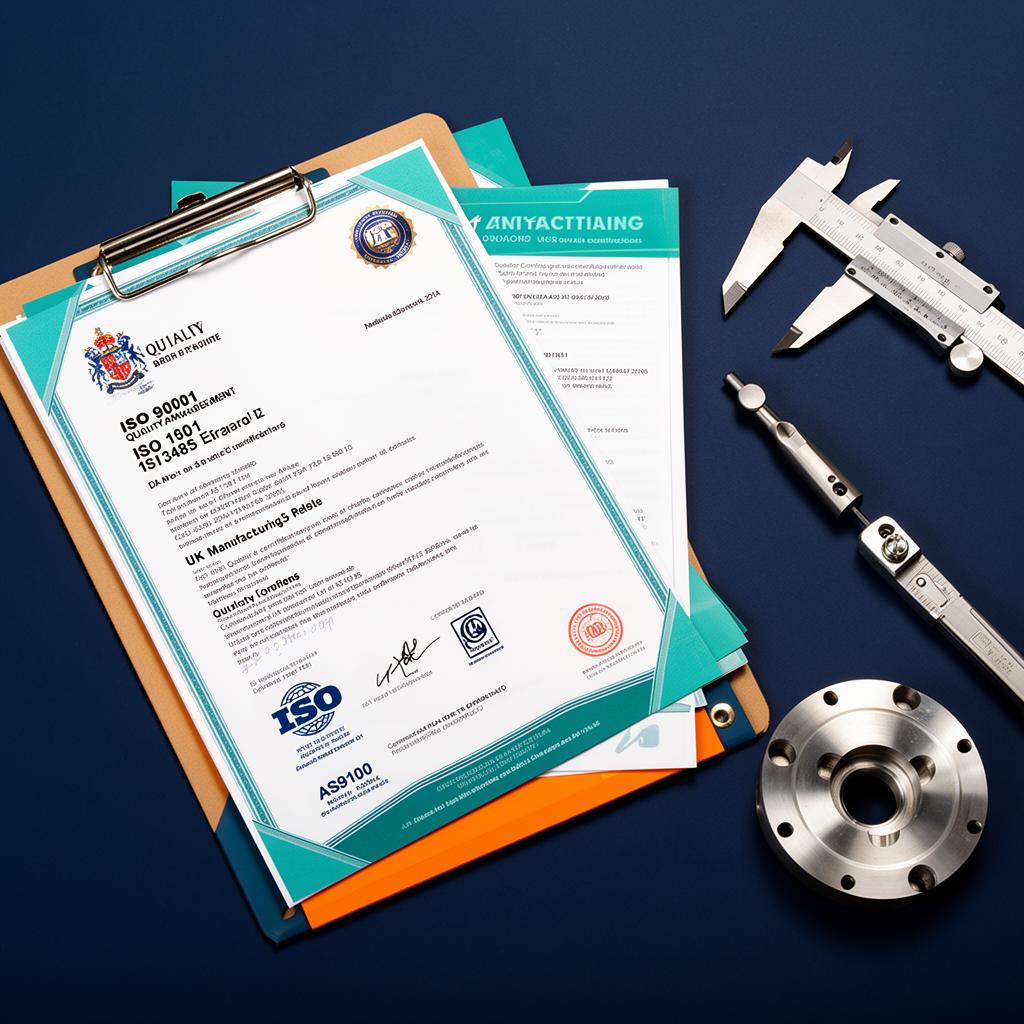
Why certifications matter for UK buyers
UK manufacturing is a deep market - from precision aerospace machinists in the Midlands to medical-grade injection moulders in the North West. The hard part is filtering capable, audit-ready suppliers from listings that look the same on paper. Certifications are the single most reliable shortcut: they prove a supplier has been independently assessed against a recognised standard.
On Industrial Connected, certifications feed directly into each supplier's Trust Score, alongside Companies House data, insurance proof and project history. Buyers can filter the directory by standard, and verified credentials are surfaced on supplier profiles with expiry tracking.
The standards UK buyers should know
The baseline quality standard expected from any serious UK manufacturer. Certifies that a supplier has documented processes, traceability and a culture of continuous improvement.
When it matters: All sectors - treat as the minimum for production work.
Sector-specific quality management for medical devices. Required for components or assemblies destined for regulated medical products in the UK and EU.
When it matters: Medical, diagnostics, surgical instrumentation, implantables.
Builds on ISO 9001 with aerospace-specific requirements: risk management, configuration control, counterfeit-part prevention and first-article inspection.
When it matters: Civil and defence aerospace, space, MRO.
Automotive sector quality management aligned with major OEM requirements. Demands robust APQP, PPAP and statistical process control evidence.
When it matters: Tier 1 and Tier 2 automotive suppliers, motorsport production parts.
Demonstrates that a supplier manages environmental impact - waste, emissions, energy use - through audited processes. Increasingly required by ESG-aware buyers.
When it matters: Public-sector tenders, large OEMs with sustainability reporting.
Replaces OHSAS 18001. Confirms an active safety management system covering hazards, incident response and worker consultation.
When it matters: Heavy fabrication, hazardous processes, on-site installation.
How certifications strengthen Trust Scores
Credentials suppliers upload are reviewed by our team where applicable and time-stamped against their expiry date. Verified certifications contribute to the supplier's Trust Score alongside Companies House status, insurance documents, NDA history and completed-project ratings - giving buyers a single number that reflects checked evidence rather than marketing copy.
- Filters out hobbyists and unverified workshops before quoting begins.
- Signals that production processes are repeatable and auditable at scale.
- Removes regulatory risk in sectors where uncertified parts cannot be used.
- Strengthens insurance, indemnity and warranty conversations with suppliers.
Matching certifications to your requirement
- 1
Identify the regulatory environment of the end product - medical, aerospace, automotive or general industrial.
- 2
Treat ISO 9001 as the minimum entry bar for any production-quantity work.
- 3
Add sector standards (ISO 13485, AS9100, IATF 16949) where regulators or OEM customers will require evidence downstream.
- 4
Layer on ISO 14001 and ISO 45001 for tenders and customers with sustainability or HSE scoring.
- 5
Use the Industrial Connected directory filters to narrow shortlists to suppliers holding exactly the standards you need.
For suppliers: getting credentials verified
Upload certificates through the verification dashboard. Each document is reviewed by our team, tagged with its issuing body and expiry date, then surfaced on your public profile with a verified badge. Approaching renewals trigger automatic reminders so credentials never lapse on a live profile.