


Avon Controls Ltd
Verified
Premium
Making controls and automation procurement simple.
HMI Development
Cable Management, Tray & Basket Supply
Circuit Protection
+6
Full profile, capabilities and contact available to members
Compare UK companies that design, manufacture, integrate and support industrial automation systems, robotic cells, control systems and special purpose machinery.

Compare Industrial Connected supplier members with capabilities relevant to automation, controls, robotics and machinery. Verification and membership status are shown on each public preview card.
Making controls and automation procurement simple.

Leading Distributor of Automation, Control, Sensing, Process, Pneumatic, Combustion, Circuit Protection & Electrical Products


Automation and Robotics Supplier

Systems Integration Specialists

Machine Vision, Controls & Software


Cobot and robot automation, machine vision and metrology


World leader in providing innovative motion control and measurement solutions.
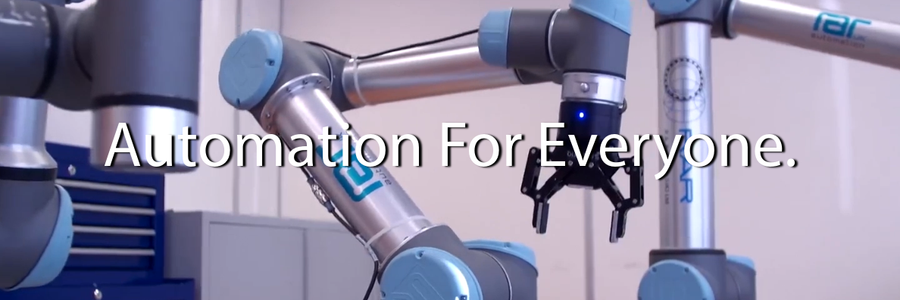

Collaborative Robots, Mobile Robots and Automation Solutions for UK Industry


Automation, Control Systems & Electrical Engineering Solutions

Industrial automation, PLC, HMI, SCADA and control system integration


Turnkey Industrial Automation & Systems Integration - From Concept to Production


Industrial automation, PLC controls and special purpose machinery
Suppliers shown here are eligible public marketplace members matched to Automation, Controls & Machinery from their recorded capabilities. Ordering prioritises category relevance before membership and verification signals. It is not an editorial ranking, and buyers should assess each company against their own technical and commercial requirements.
New machinery supplied in Great Britain falls under the Supply of Machinery (Safety) Regulations 2008, which require a risk assessment, a technical file, instructions, a declaration of conformity and a conformity marking. Both CE and UKCA marking are currently accepted in Great Britain for machinery, so UKCA is not the only acceptable marking. These rules change over time, so confirm the position that applies on the date of your order.
Standards wording reviewed on 30 July 2026. Source: GOV.UK: Using the UKCA marking.
Automation, Controls & Machinery covers UK systems integrators and machine builders who design, build and program automated production equipment - from a single robotic cell to a full bespoke production line.
The best automation partner is the one that understands the process, can prove comparable integration experience and accepts clear responsibility for design, safety, software, commissioning and aftercare.
Automation projects fail on integration, not on hardware. The buying process needs to lock scope, interfaces and acceptance long before steel is cut.
URS defines what the system must do, in what cycle time, to what OEE target, with what safety performance level. Without it every quote is comparing different things.
One integrator vs separate mechanical, controls and safety is a real trade-off. Single-point accountability vs best-of-breed flexibility.
Specify PLC and HMI brand, network (Profinet, EtherNet/IP), safety platform, naming standards and code style before contract.
Factory Acceptance Test on the vendor floor, Site Acceptance Test in your factory, with a documented punch list and sign-off.
Operator and maintenance training, full as-built documentation, source code escrow and spares package on day one of production.
The service lines suppliers in this category typically deliver.
These are the third-party certifications buyers commonly ask suppliers in this category to hold. Industrial Connected Verification is a separate check of company identity and credentials, and approved certifications uploaded by a supplier also contribute towards their Trust Score.
Baseline quality system.
Conformity duties for machinery placed on the market. Both CE and UKCA marking are currently accepted in Great Britain; confirm the rules in force at the time of order.
Functional safety for machinery control systems.
H&S management for site work.
Personnel competence for hazardous area installation.
A realistic starting point for planning. Actual lead times depend on volume, material availability, finishing, inspection requirements and current supplier load. Confirm in writing on every quote.
Lead times range from 8 weeks for simple PLC upgrades to 40 weeks for complex bespoke systems.
Run through this checklist with any candidate supplier before awarding work. If they cannot evidence an item, treat it as a risk to manage, not an assumption to ignore.
The avoidable issues we see most often, with the one-line fix that prevents them.
The supplier profiles you will typically meet when sourcing in Automation, Controls & Machinery.
Multi-discipline build of bespoke automation around a brief or URS.
Mechanical, electrical and software in-house for end-to-end build.
Authorised partners for ABB, FANUC, KUKA, Universal Robots and others.
PLC, HMI, SCADA, vision and motion programming on a subcontract basis.
Representative briefs and scopes buyers post in this category.
Lead times range from 8 weeks for simple PLC upgrades to 40 weeks for complex bespoke systems.
A systems integrator brings together equipment, robots, controls and software from several sources and makes them work as one system, often around existing plant. A machine builder designs and manufactures the machine itself, usually including the mechanical build. Many UK companies do both, so ask which disciplines are delivered in-house, which are subcontracted, and who takes single-point responsibility for the finished installation.
Describe the product and its variants, the process steps, the required throughput and quality criteria, the site layout and services, the interfaces to existing equipment and IT systems, your PLC, HMI, SCADA and safety standards, and the documentation, training and support you expect at handover. Set out acceptance criteria for FAT and SAT in the same document so quotations can be compared against the same measurable requirement.
There is no standard duration. Timescales depend on the scope of design, the number of disciplines involved, long-lead components such as robots, drives and controls, software complexity, and the site access available for installation and commissioning. Ask each supplier for a programme against your own requirement, with named milestones for design freeze, build, FAT, installation, SAT and handover, rather than assuming a typical figure.
Factory acceptance testing should prove the machine or cell against the agreed functional specification before it leaves the supplier: function, cycle behaviour, quality checks, changeover, alarms, safety functions and recovery from fault conditions. Site acceptance testing repeats the critical tests in the live environment with your own product, materials, services and operators, and adds the interfaces to upstream and downstream equipment. Agree both protocols in writing before order.
Decide this before contract, not at handover. Buyers who intend to maintain or modify equipment themselves usually require unlocked, commented source code for PLC, HMI, robot and vision applications, together with project files, licences, passwords and backups. Some suppliers offer restricted or escrowed code instead. Whatever is agreed, record ownership, access rights and the handover format explicitly in the quotation.
For new machinery placed on the market, expect a risk assessment, the safety functions and their required performance level or safety integrity level with supporting calculations, guarding and interlock details, the technical file, instructions for use, a declaration of conformity and the applied conformity marking. Where you are combining or modifying existing machinery, agree in writing who takes responsibility for the assembly. Marking and conformity rules change over time, so confirm the current Great Britain requirements at the point of order.
Normalise the scope first. Confirm each quotation covers the same design deliverables, disciplines, safety scope, controls platform, spares, documentation, training, FAT and SAT protocols, installation and commissioning, and aftercare. Then compare exclusions and assumptions, because that is usually where the real difference sits. Posting one project brief lets relevant supplier members respond against the same requirement, which keeps the comparison on equal terms.