Buyer categories

Metals & Fabrication

Sheet metal, welding, cutting, presswork and forming across the UK metal fabrication supply chain. Castings sit under Castings & Forgings; finishing under Surface Finishing & Treatments.
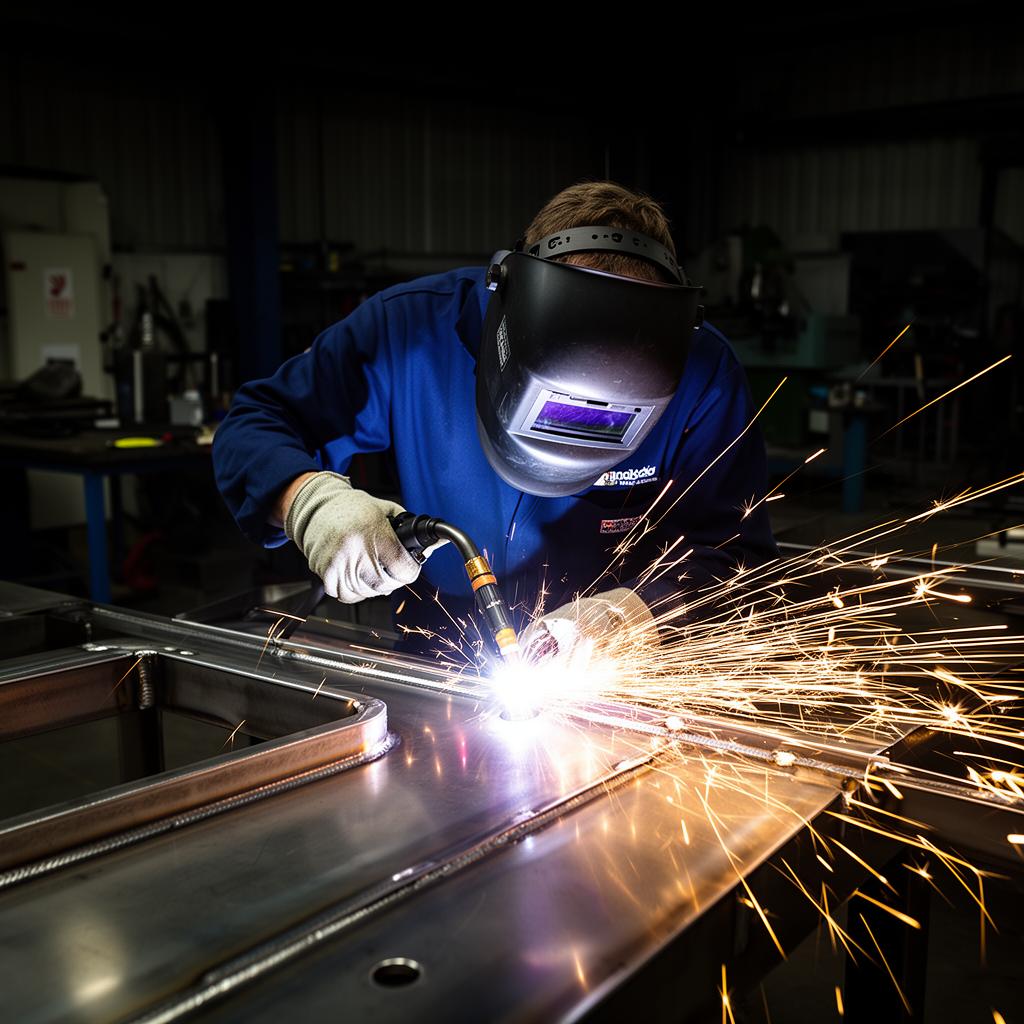
Metals & Fabrication - UK manufacturing suppliers
Overview

Cut, formed and fabricated metal

Metals & Fabrication covers the UK supply chain that turns raw metal into finished parts and assemblies - from sheet metal enclosures and welded frames to investment castings and surface-finished components.

When to use
  • You need enclosures, brackets, frames or structural metalwork
  • You require castings in aluminium, steel or specialist alloys
  • You need cutting, forming or pressing in volume
  • You need finishing - powder coating, plating, anodising, heat treatment
What to look for
  • Capability for the material grade and thickness you need
  • In-house finishing vs. subcontracted (affects lead time and price)
  • Welding qualifications (BS EN ISO 9606, coded welders for regulated industries)
  • Quality systems - ISO 9001, EN 1090 for structural steelwork
Buying guide

How to buy metals & fabrication

Fabrication is process-driven: cut, form, weld, finish. Lead time and price are dictated by which steps stay in-house and which get subcontracted.

  1. 01
    Lock the design intent

    Issue flat patterns, weld symbols, bend allowances and finished assembly drawings. Ambiguous welding callouts cause more disputes than anything else.

  2. 02
    Choose the right process

    Laser plus press brake for prototypes and low volumes; presswork for high volumes; waterjet for thick plate or heat-sensitive materials.

  3. 03
    Pin down welding qualifications

    If parts are structural, pressurised or regulated, name the welder qualification (BS EN ISO 9606), procedure (WPS / WPQR) and inspection level (visual, dye pen, radiographic).

  4. 04
    Specify finishing as part of the brief

    Reference RAL for powder coat, BS EN ISO 1461 for galvanising, BS EN ISO 7599 for anodising, plus salt spray hours where corrosion matters.

  5. 05
    Agree packaging and delivery

    Sharp-edged or coated parts damage easily. Specify interleaving, crating and Incoterms before quoting.

Typical services

Services offered in Metals & Fabrication

The service lines suppliers in this category typically deliver.

Laser, waterjet and plasma profilingCNC press brake forming and bendingMIG, TIG and robotic weldingSheet metal enclosure and bracket fabricationStructural steelwork and weldmentsPresswork and metal formingIn-house finishing or subcontracted powder coat
Certifications required

Standards and accreditations to look for

These are the third-party certifications buyers commonly ask suppliers in this category to hold. Industrial Connected Verification is a separate check of company identity and credentials, and approved certifications uploaded by a supplier also contribute towards their Trust Score.

ISO 9001

Baseline quality system across UK fabricators.

EN 1090

CE / UKCA marking of structural steel and aluminium.

BS EN ISO 3834

Welding quality requirements for fusion welding of metals.

BS EN ISO 9606

Coded welder qualification for regulated industries.

ISO 14001

Environmental management for sites running paint and finishing.

Typical lead times

Lead times in Metals & Fabrication

A realistic starting point for planning. Actual lead times depend on volume, material availability, finishing, inspection requirements and current supplier load. Confirm in writing on every quote.

Lead times typically range from two weeks for laser parts to twelve weeks for complex weldments.

Supplier checklist

How to vet a metals & fabrication supplier

Run through this checklist with any candidate supplier before awarding work. If they cannot evidence an item, treat it as a risk to manage, not an assumption to ignore.

  • Material grade and thickness range you need is on the standard cut list.
  • Welding qualifications (BS EN ISO 9606) and procedures (WPS / WPQR) on file for the joints you need.
  • EN 1090 execution class declared if the work is structural.
  • In-house finishing or named, approved sub-tier finishers with stable lead times.
  • Realistic capacity for the batch size, not just one-off prototypes.
  • Quality system certified and audited (ISO 9001 minimum, sector standards where required).
  • Two reference customers in your sector willing to take a call.
  • Insurance, IP and NDA position confirmed in writing before sharing drawings or data.
  • Commercial terms agreed: payment terms, currency, retention, delivery Incoterms.
Common mistakes

Common mistakes buyers make in Metals & Fabrication

The avoidable issues we see most often, with the one-line fix that prevents them.

Sending an STL or PDF instead of editable flat patterns.
Fix: Provide DXF or STEP plus an assembly drawing so the supplier does not redraw the part.
Leaving weld callouts open to interpretation.
Fix: Use full ISO 2553 weld symbols and reference the inspection level required.
Treating finishing as an afterthought.
Fix: Specify finish, colour, thickness and standard at quote stage; it usually doubles the lead time when added late.
Ignoring sheet grain direction on cosmetic parts.
Fix: Call out grain direction on the drawing for any visible stainless or aluminium surface.
Choosing on price without seeing capacity evidence.
Fix: Ask for a current order book snapshot and a named planner before awarding a recurring contract.
Supplier types

Kinds of suppliers in this category

The supplier profiles you will typically meet when sourcing in Metals & Fabrication.

Sheet metal fabricators

Profile, form, weld and finish under one roof, typically up to a few tonnes.

Structural steelwork contractors

EN 1090 fabricators for building frames, walkways and platforms.

Press and forming shops

Higher-volume presswork on dedicated tooling.

Specialist welding contractors

Coded welders for pressure, rail, defence and energy work.

Example projects

Example projects in Metals & Fabrication

Representative briefs and scopes buyers post in this category.

Small batch production of stainless steel enclosures for food processing machinery.
Heavy structural steel frame fabrication for a new industrial warehouse development.
Precision laser cut and CNC folded aluminium brackets for automotive assemblies.
Coded welding for a series of carbon steel pressure vessels and tanks.
Procurement guidance

Buyer & supplier guidance

For buyers
What to include in your brief
  • Provide full technical drawings in PDF and CAD formats.
  • Specify the required material grade and any thickness tolerances.
  • Define the inspection criteria and any non destructive testing requirements.
  • Include quantities and required delivery dates for production scheduling.
Common certifications
ISO 9001 Quality ManagementISO 3834 Welding Quality RequirementsBS EN 1090 Structural Steelwork CE/UKCA markingISO 14001 Environmental Management
Typical lead times

Lead times typically range from two weeks for laser parts to twelve weeks for complex weldments.

Procurement considerations
  • Verify CE or UKCA marking compliance for structural steel components.
  • Evaluate the finish requirements against the supplier in house coating capabilities.
  • Assess material traceability for high integrity aerospace or nuclear projects.
  • Compare logistics costs for bulky heavy fabrications versus local production.
For suppliers
What buyers expect in your profile
  • Showcase high quality images of complex completed weldments and assemblies.
  • List maximum crane capacities for heavy fabrication and structural work.
  • Detail specific machinery brands and bed sizes for laser cutting services.
  • Highlight experience in specific sectors such as offshore or automotive.
Recommended certifications
ISO 3834 Coded WeldingBS EN 1090 Execution Class 2 or 3AS9100 for aerospace fabrication projectsISO 9001 Quality Management System
Capability information to show
  • Multi axis CNC laser and plasma cutting services.
  • Coded welding for pressure vessels and structural frames.
  • High volume sheet metal punching and press brake forming.
  • Large scale heavy fabrication and assembly capabilities.
Buyer FAQs

Buyer FAQs for Metals & Fabrication

Should I separate cutting, forming and finishing?

Most UK fabricators offer cutting, forming and welding in-house and subcontract finishing. A single supplier is usually faster and cheaper than splitting work.

What's the best process for low-volume enclosures?

Laser cutting plus bending is the default for prototype and low-volume sheet metal. For higher volumes, presswork becomes cost-effective.

How do I specify a finish?

Reference a standard (e.g. RAL colour for powder coat, BS EN ISO 7599 for anodising) and state any salt-spray or thickness projects.