
Dean Group international
Verified
Premium
Investment Foundry
Closed-Die Forging
High-Pressure Die Casting
Investment Casting
+4
Full profile, capabilities and contact available to members
UK foundries and forge shops producing sand, investment, die and precision castings, aluminium and steel castings, and forgings for engineered assemblies.
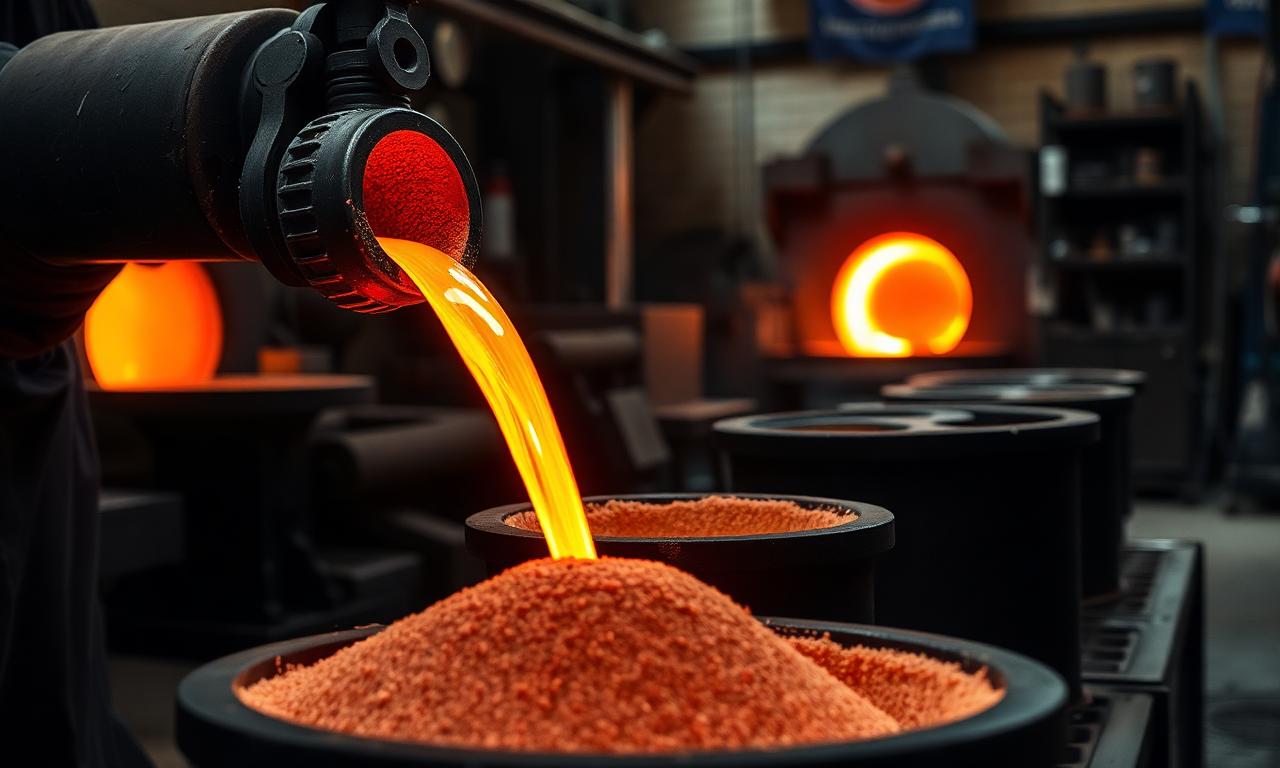
Industrial Connected suppliers with recorded capabilities relevant to castings & forgings.
Investment Foundry

Precision Engineering and machining, Forgings, Phosphating

Precision CNC machining, from design to manufacturing
Castings & Forgings brings together UK foundries and forge shops producing near-net-shape components in aluminium, iron, steel and specialist alloys. Use this category when you need cast or forged blanks for machining, structural components in volume, or precision investment castings for complex geometries.
Castings and forgings are tooling-intensive. Most of the cost lives in pattern, die or forge tooling and qualification, so supplier change later is expensive.
Sand, investment, gravity, low-pressure or high-pressure die casting for cast parts; open die, closed die or cold forging for forged parts. Each has a sweet spot for volume, geometry and finish.
Pattern, die or forging tool ownership, storage and end-of-life should be agreed before tooling cuts. Tool ownership protects the right to re-source later.
Material spec (BS EN, ASTM), heat treatment, mechanical property minimums and any NDT requirement (UT, MT, X-ray, dye pen).
First Article Inspection, sample mechanical tests, and any sector PPAP / Nadcap qualification before serial production.
Decide whether the casting / forging supplier machines, or a separate machine shop does, and where the supply chain handover sits.
The service lines suppliers in this category typically deliver.
These are the third-party certifications buyers commonly ask suppliers in this category to hold. Industrial Connected Verification is a separate check of company identity and credentials, and approved certifications uploaded by a supplier also contribute towards their Trust Score.
Baseline quality system across UK foundries and forges.
Aerospace quality system for castings and forgings.
Automotive quality system.
Founding general technical delivery requirements.
Pressure Equipment Directive for pressure-bearing castings.
Marine and offshore classification society approvals.
A realistic starting point for planning. Actual lead times depend on volume, material availability, finishing, inspection requirements and current supplier load. Confirm in writing on every quote.
Tooling typically 6 to 16 weeks. Production batches typically 4 to 10 weeks depending on alloy, finishing and inspection.
Run through this checklist with any candidate supplier before awarding work. If they cannot evidence an item, treat it as a risk to manage, not an assumption to ignore.
The avoidable issues we see most often, with the one-line fix that prevents them.
The supplier profiles you will typically meet when sourcing in Castings & Forgings.
Low to mid volume, large parts in iron, steel and aluminium.
Complex, near-net-shape parts to tight tolerance in alloys and super alloys.
High-volume non-ferrous castings, typically aluminium and zinc.
Open and closed-die forging for shafts, flanges and structural components.
Foundries offering full post-cast machining and assembly.
Representative briefs and scopes buyers post in this category.
Tooling typically 6 to 16 weeks. Production batches typically 4 to 10 weeks depending on alloy, finishing and inspection.
Sand casting suits low volumes and large parts; investment casting suits complex geometry and tight tolerances; die casting suits high volumes of non-ferrous parts. Most UK foundries will advise once they see the part.
Typically the buyer pays for and owns the pattern or die even if it lives at the foundry. Confirm storage, maintenance and replacement terms upfront.
Many UK foundries offer post-cast machining and finishing, or coordinate with partners. Specify whether you want as-cast, machined or fully finished components.