Buyer categories

Surface Finishing & Treatments

UK specialists in anodising, powder coating, wet paint, plating, heat treatment, shot blasting and specialist industrial coatings.
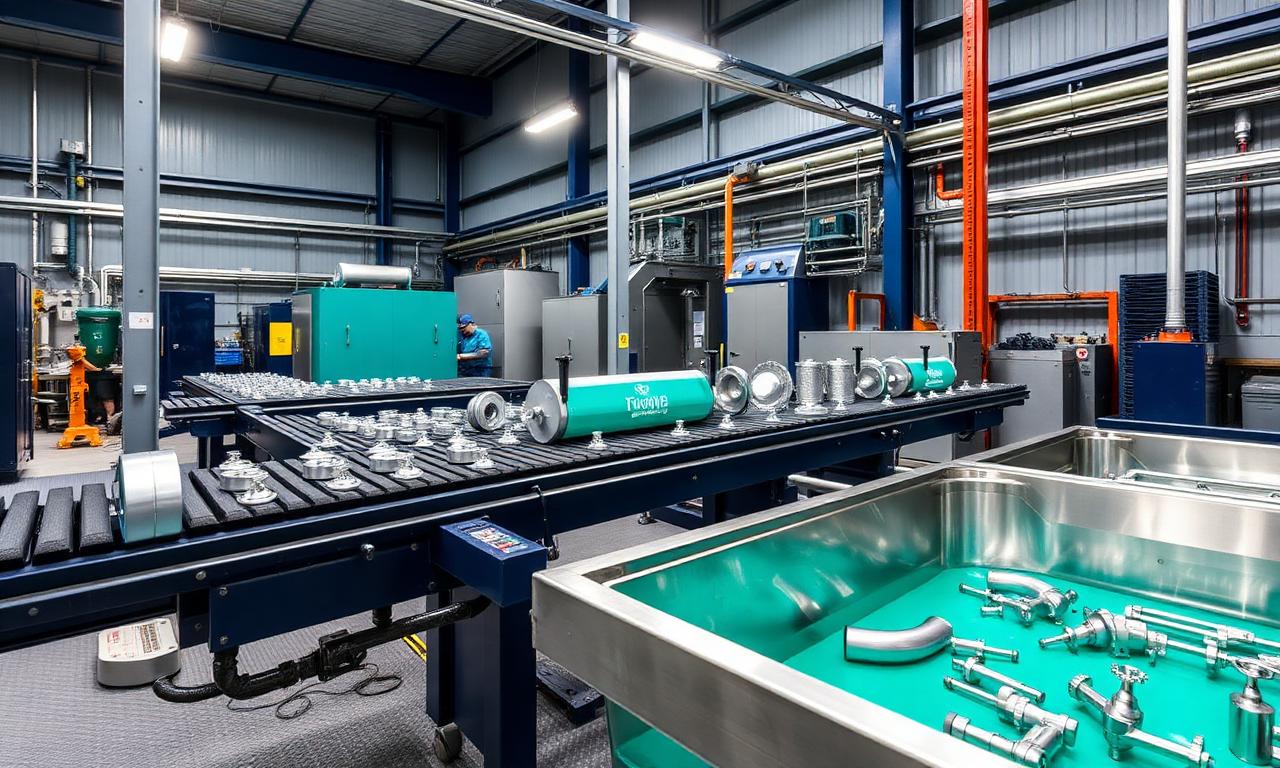
Surface Finishing & Treatments - UK manufacturing suppliers
Overview

Coatings, plating, anodising and heat treatment

Surface Finishing & Treatments covers UK finishers and treatment specialists who apply protective, decorative or functional surfaces to engineered parts - from powder coating and wet paint to anodising, plating, heat treatment and specialist industrial coatings. Most buyers source finishing as a separate step after machining, fabrication or casting.

When to use
  • You need a corrosion-resistant or decorative finish on machined or fabricated parts
  • You need anodising, plating or specialist coatings to a defined standard or RAL colour
  • You need heat treatment (hardening, tempering, normalising, stress relief) to a material spec
  • You need shot blasting, bead blasting or surface preparation ahead of coating
What to look for
  • Capacity for your part size, weight and substrate
  • Quality systems - ISO 9001, Nadcap for aerospace, IATF 16949 for automotive
  • Process control - bath chemistry, salt-spray testing, coating thickness measurement
  • Logistics - collection and delivery, jigging capability, batch turnaround
Buying guide

How to buy surface finishing & treatments

Surface finishing is a regulated, chemistry-driven process. Wrong supplier means wrong colour, wrong corrosion life or a failed regulatory audit.

  1. 01
    Define the finish to a standard

    Reference BS EN ISO 1461 (galvanising), BS EN ISO 7599 (anodising), BS EN ISO 4042 (electroplating), or RAL number plus gloss for paint.

  2. 02
    State the performance target

    Salt-spray hours, coating thickness, adhesion class, conductivity, and any sector requirements (Qualicoat, GSB, Cadmium-free).

  3. 03
    Plan masking and racking

    Threaded holes, mating surfaces and electrical contacts often need masking. Specify on the drawing, not in an email.

  4. 04
    Agree inspection and reporting

    Coating thickness reports, salt-spray test certificates, batch traceability and rework process before first lot.

  5. 05
    Confirm REACH, CoSHH and ESG position

    Hexavalent chrome, cadmium and certain solvents are restricted. Confirm the supplier's chemistry roadmap aligns with yours.

Typical services

Services offered in Surface Finishing & Treatments

The service lines suppliers in this category typically deliver.

Powder coating and wet paint to RALHard and decorative anodisingZinc, nickel and chrome platingHeat treatment (hardening, tempering, normalising, stress relief)Shot, bead and grit blastingSpecialist functional coatings (PTFE, ceramic, electroless nickel)Masking, jigging and rework services
Certifications required

Standards and accreditations to look for

These are the third-party certifications buyers commonly ask suppliers in this category to hold. Industrial Connected Verification is a separate check of company identity and credentials, and approved certifications uploaded by a supplier also contribute towards their Trust Score.

ISO 9001

Baseline quality system across UK finishers.

Nadcap CP

Aerospace approval for chemical processing and coatings.

IATF 16949

Automotive quality system for finishing.

Qualicoat / GSB

Architectural powder coat quality marks.

BS EN ISO 7599

Anodic oxidation of aluminium standard.

ISO 14001

Environmental management for plating effluent and paint process.

Typical lead times

Lead times in Surface Finishing & Treatments

A realistic starting point for planning. Actual lead times depend on volume, material availability, finishing, inspection requirements and current supplier load. Confirm in writing on every quote.

Typically 3 to 10 working days for stocked colours and standard processes; longer for specialist coatings, large batches or full re-work.

Supplier checklist

How to vet a surface finishing & treatments supplier

Run through this checklist with any candidate supplier before awarding work. If they cannot evidence an item, treat it as a risk to manage, not an assumption to ignore.

  • Process accreditation (Qualicoat, GSB International, Nadcap for aerospace).
  • Coating thickness, adhesion and salt-spray testing in-house.
  • Pre-treatment chemistry suited to your substrate (steel, aluminium, zinc).
  • Hanging and racking design support for awkward parts.
  • Documented effluent treatment and environmental permit.
  • Quality system certified and audited (ISO 9001 minimum, sector standards where required).
  • Two reference customers in your sector willing to take a call.
  • Insurance, IP and NDA position confirmed in writing before sharing drawings or data.
  • Commercial terms agreed: payment terms, currency, retention, delivery Incoterms.
Common mistakes

Common mistakes buyers make in Surface Finishing & Treatments

The avoidable issues we see most often, with the one-line fix that prevents them.

Specifying a colour by sample only.
Fix: Always reference a standard (RAL, BS, NCS) and gloss level alongside the sample.
Forgetting to mask threads and bores.
Fix: Specify masking on the drawing with hole numbers and depths.
Ignoring substrate prep.
Fix: Define pre-treatment, blast profile and degrease standard in the spec.
Underestimating salt-spray cycle time.
Fix: Plan two to four weeks for ASTM B117 salt-spray testing when validating a new coating.
Not auditing the chemistry roadmap.
Fix: Ask how the supplier is replacing hexavalent chrome and other restricted substances.
Supplier types

Kinds of suppliers in this category

The supplier profiles you will typically meet when sourcing in Surface Finishing & Treatments.

Trade powder coaters and painters

High-volume coating shops with batch and conveyorised plant.

Aluminium anodisers

Sulphuric, hard and decorative anodising lines, with masking and racking.

Electroplating specialists

Zinc, nickel, chrome and tin plating to defined standards.

Heat treatment subcontractors

Vacuum, atmosphere and induction treatment for steels and alloys.

Aerospace-approved finishers

Nadcap CP shops handling primer, paint and chemical processes.

Example projects

Example projects in Surface Finishing & Treatments

Representative briefs and scopes buyers post in this category.

Powder coat 200 sheet-metal enclosures RAL 9005 matt
Hard anodise aluminium housings to 25 microns
Zinc plate and yellow passivate 5,000 steel brackets
Heat treat and temper EN24 shafts to 28-32 HRC
Procurement guidance

Buyer & supplier guidance

For buyers
What to include in your brief
  • Part drawings or 3D model with finished areas marked
  • Substrate material and pre-finish condition
  • Required finish standard (RAL, BS EN ISO 7599, AMS, etc.) and coating thickness
  • Batch size, frequency and any masking or jigging requirements
Common certifications
ISO 9001Nadcap (aerospace)IATF 16949 (automotive)Qualicoat / GSB (architectural powder coat)
Typical lead times

Typically 3 to 10 working days for stocked colours and standard processes; longer for specialist coatings, large batches or full re-work.

Procurement considerations
  • Free-issue parts vs. collection-and-return logistics
  • Salt-spray or coating-thickness reporting requirements
  • Pre-treatment specification (blast profile, degrease, etch)
  • Re-work and re-coat policy for rejects
For suppliers
What buyers expect in your profile
  • List processes by substrate (steel, aluminium, stainless, plastic, etc.)
  • State maximum part size, weight and batch capacity
  • Show example finishes with thickness and standard reference
  • Cover logistics: collection radius, turnaround, jig design service
Recommended certifications
ISO 9001Nadcap CP (aerospace coatings)QualicoatISO 14001
Capability information to show
  • Available coatings, colours and standards
  • Pre-treatment and surface preparation processes
  • Measurement and reporting (thickness, salt-spray, adhesion)
  • Masking, jigging and rework capability
Buyer FAQs

Buyer FAQs for Surface Finishing & Treatments

Which finish gives the best corrosion protection?

It depends on the substrate and environment. Zinc plating with a clear or yellow passivate is the workhorse for steel parts in mild environments; for harsher conditions, look at Dacromet, hot-dip galvanising or specialist coatings.

What's the difference between anodising and powder coating?

Anodising builds an oxide layer on aluminium (decorative or hard-wearing); powder coating is a sprayed and cured polymer film. They serve different needs - anodising is conductive-safe, powder coating offers a wider colour range.

Should I include finishing in the same project as machining?

Many UK machinists and fabricators have preferred finishing partners. You can post a project for the finished part and let the supplier subcontract, or separate them if you have a nominated finisher.